The wayfinding signs went up around town this month, about 3,500 of them, and the mood on transit Reddit slid from confusion to gallows humor almost overnight. On Sunday, TriMet stops pretending the math works. This week's case is the slow-motion collapse behind those signs: a $300M hole, a shrinking Green Line, and reserves counting down to zero.
In today’s case file:
Let's follow the money. 🕵️
P.S. Forwarded this? Get your own case file every Friday. It's free.
🚆 A $300M HOLE, AND MAX GETS SHORTER SUNDAY
The Fiscal Cliff Arrives at Your Bus Stop
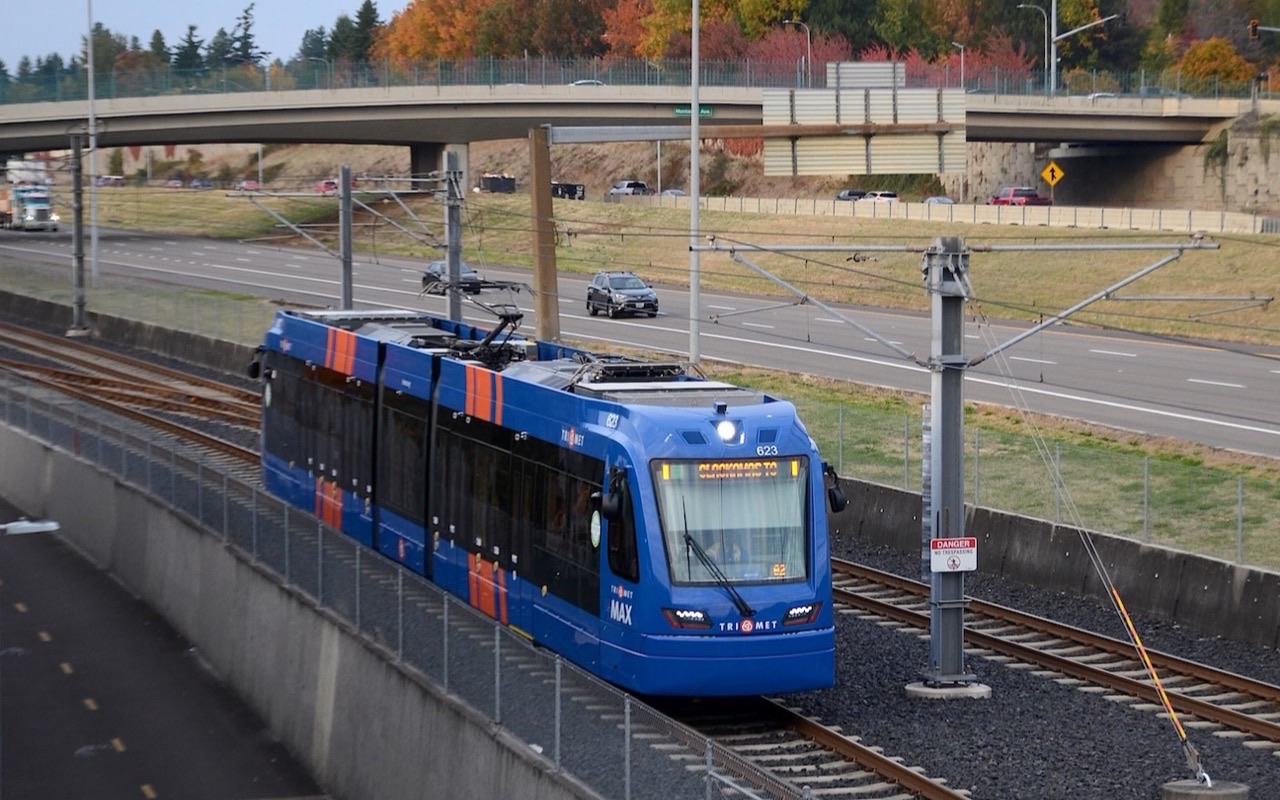
TriMet is a public transit district funded largely by an employer payroll tax the state legislature has raised, decade after decade, to keep the buses and trains running. The pitch to riders, employers, and voters has always been the same: pay the tax, keep the service, and the region grows around the network. Since 2016 the payroll tax has climbed on a scheduled ladder, most recently to 0.8237% of wages effective January 1, 2025, with the promise that the money would sustain, not shrink, the system.
A $300M structural hole opened, and 5% of service is being cut to start closing it. TriMet first announced a $300 million structural budget deficit in July 2025. The package, along with prior cuts, reduces overall service across the system by about 5% compared to where it was in the fall of 2025.
The MAX Green Line is being amputated at Gateway. Starting Sunday the MAX Green Line runs only between Clackamas Town Center and Gateway Transit Center. Riders headed downtown from the I-205 corridor must transfer to the Red or Blue line at Gateway, and stations along I-84 and the downtown transit mall will see reduced service frequency overall.
Reserves are propping up the FY27 budget, and they run out in 2029. The FY 2027 budget totals $1.75 billion, with $1.14 billion available for service, operations, capital and maintenance projects and other requirements, and relies on $187.4 million in reserve funds to close the gap between expenses and revenues. TriMet expects those funds to be exhausted by May 2029.
The workforce is already 500 positions smaller. Overall staffing has dropped more than 500 positions since July 1, 2025, from 3,708 to 3,204 following planned layoffs by end of summer 2026. TriMet will eliminate approximately 400 positions in the first quarter of the fiscal year starting July 1, 2026, about 140 of which currently sit vacant; the number of employees facing layoff is about 170, roughly 100 nonunion and 70 union.
This is what a transit fiscal cliff actually looks like in practice: not a press release, but a shorter train and a longer walk. TriMet says costs for operating public transit increased an average of 56% between 2019 and 2025 and continue to rise in 2026, while revenues have not kept pace. The state legislature's 2025 transportation package, which was supposed to backfill transit funding, still leaves the agency short: under the amended special session proposal, TriMet expected to cut $207 million in service over the next three years, per spokesperson Roberta Altstadt. Every reserve dollar TriMet burns to preserve service today is a dollar it does not have to burn in 2028, and the agency has said additional service cuts and changes will be proposed this fall for summer 2027.
Service changes take effect Sunday, August 23. 34 bus lines change or vanish, and the MAX Green Line shortens between Gateway and downtown.
Community engagement on the 2027 cuts begins this fall. TriMet will begin engaging riders and the public about the next round in fall 2026.
📁 RECEIPTS: TriMet · Service Cuts and Changes, August 23, 2026 · TriMet · Fiscal Year 2027 Approved Budget · TriMet · Budget Challenges and Choices · KGW · TriMet board approves cost-cutting plan · Railway Supply · TriMet FY27 budget cuts
🔍 EVERYTHING ELSE ON THE BEAT
Update: The PCEF-to-police initiative fell short: the petition collected only 34,130 valid signatures, more than 6,000 short of the 40,437 needed, and backers are pledging to sue. · via Portland Mercury
Developing: Multnomah County's Homeless Services Department is facing a $67M gap this year, mostly from expiring one-time funds, per Chair Vega Pederson's proposed FY 2026-27 budget. · via Multnomah County
Open: A March city audit found Portland has never measured whether the Arts Tax delivered what voters bought in 2012, and the city administrator warned the fund will be unable to meet its obligations by 2030. · via Willamette Week
WHERE DOES TRIMET'S MONEY ACTUALLY COME FROM?
This is exactly why the current cliff is so hard to climb: the escalator that grew TriMet's revenue for a decade hit its statutory ceiling in January 2025, right as costs kept rising.
Most of it is a tax your employer pays, not you. The biggest single source is the TriMet payroll tax, an excise tax on employers based on wages paid for work performed inside the district. The TriMet Transit Payroll Tax is an employer-paid tax and is not deducted from an employee's paycheck. Because it is levied on employers based on total payroll rather than on individual employees, it doesn't show up as a withheld line item on personal pay stubs.
The legislature caps the rate, and TriMet just hit the ceiling. State law (ORS 267.385) sets the maximum: a district may impose an excise tax on every employer equal to not more than eight-tenths of one percent of the wages paid. The legislature gave TriMet permission to climb by one-tenth of a percent per year through 2025, and effective January 1, 2025, the rate increased to 0.8237%. That was the final scheduled step. The escalator is done.
There's a second, statewide transit tax, and this one you DO pay. Separate from TriMet's employer tax, Oregon's statewide transit tax is one-tenth of one percent (0.001), or $1 per $1,000, withheld from every Oregon worker's paycheck. That money flows into the Statewide Transportation Improvement Fund (STIF), distributed to transit agencies across the state. STIF funding tends to make up about 5–10% of a transit agency's revenue, based on recent budgets.
Fares are a smaller slice than most riders assume. Almost 90 percent of TriMet's revenues come from three sources: passenger revenues, payroll tax revenues, and grants from federal and state programs. Payroll tax dwarfs fares. That is the point of the mechanism: fund the system off the region's payroll, not off the rider paying to get to work.
🔍 SPOT IT: Next time an employer complains about the 'TriMet tax,' remember two things. It's an excise tax on THEM, not a deduction from staff paychecks. And the rate is capped by the legislature in Salem, not set by TriMet in Portland. Any real revenue increase has to go through the state.
📁 RECEIPTS: ORS 267.385 · Employer payroll tax · Oregon DOR · TriMet Transit Payroll Tax
🗳️ YOU PICK NEXT WEEK'S CASE
Three promises are on my desk. Whichever gets the most votes by Sunday, I open Monday.
👋 THAT'S THE FILE
Before you go — two things:
📂 Got a promise you want investigated? Send me the tip.
🕵️ Know someone heading to the ballot box? Deputize them.
See you next Friday,