
It's the last Friday of August, the smoke rolled back in Wednesday, and the state fair is doing brisk trade in elephant ears while Oregon's homelessness count keeps climbing. Which is a fitting frame for this week's case: $1.4 billion in state money spent on affordable housing, and a 1997 records law that says you don't get to see how it landed.
In today’s case file:
Let's follow the money. 🕵️
P.S. Forwarded this? Get your own case file every Friday. It's free.
🏠 $1.4B SPENT, AND THE BOOKS ARE SEALED
The Receipts You're Not Allowed to See
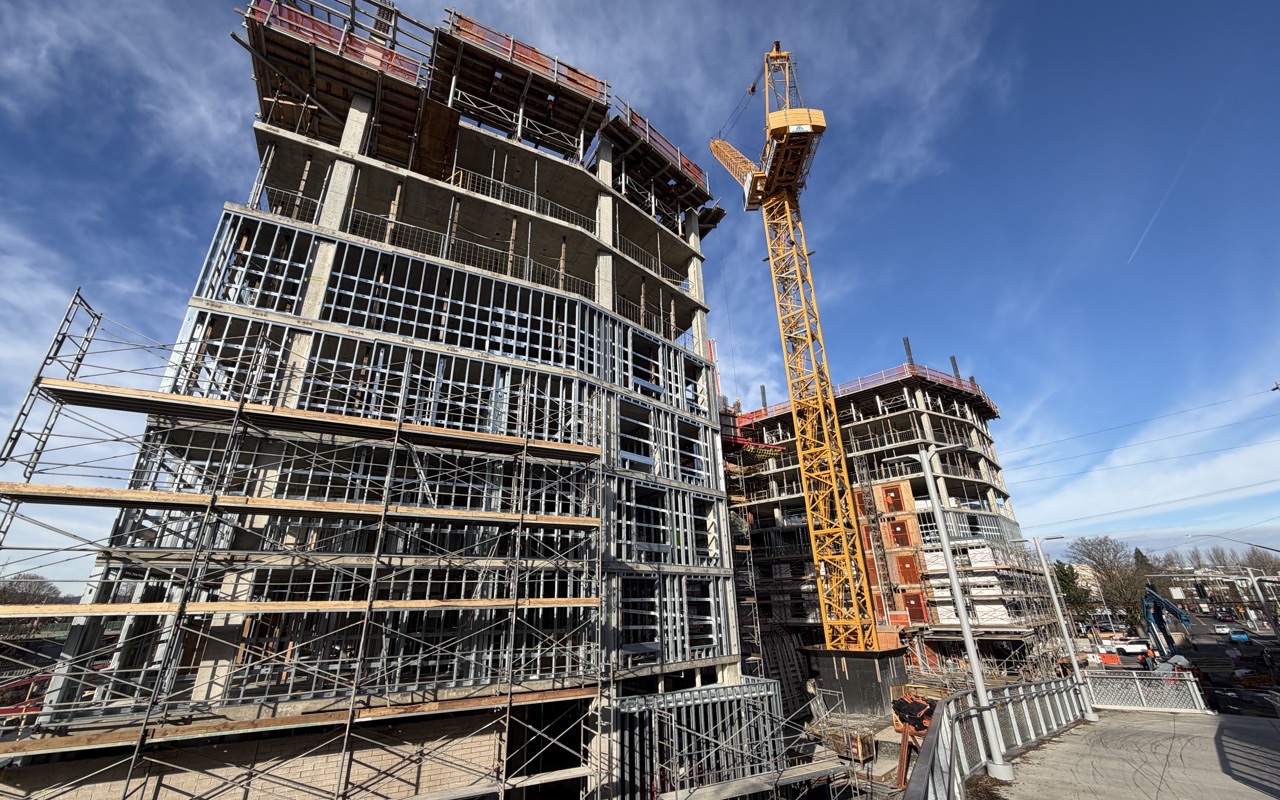
When Oregon voters and lawmakers backed a decade of new housing spending, the pitch was straightforward: get low-income Oregonians into apartments, and show the work. Oregon Housing and Community Services has since handed developers an unprecedented $1.4 billion, with roughly $850 million more lined up. The premise, in every hearing, was that public money on this scale would come with public accountability.
The state has spent $1.4B, and the per-unit cost has nearly doubled. A ProPublica, OPB and Oregonian investigation published August 21 reports Oregon has given developers an unprecedented $1.4B, with the cost of developing each subsidized apartment climbing to about $540K, and dozens more projects lined up for another $850M in future state funding.
A 1997 carve-out in state records law hides the receipts. Oregon is one of the only states with a public-records exemption (ORS 192.345(21)) that lets the state redact developers' financial statements, tax returns, appraisals and pro forma cash flows for subsidized housing. The Legislature approved the exemption in 1997, when the state housing agency was one-fifth its current size.
Comparable states hand the same records over without a fight. ProPublica requested three Seattle-area project files from Washington's counterpart agency and got them released without redactions, and for free. California, which also treats these records as public, told reporters it has 'not encountered any difficulty in developing affordable housing because those documents are public.'
Where costs are visible, the range is wide. In Central Oregon reporting drawn from state materials, Home Forward and the Urban League's 229-unit Broadway Corridor project in Portland pencils out at roughly $733K per unit, while Redmond's Antler Meadows came in at about $365K per unit and was denied LIFT funding in the last cycle.
Oregon's homeless count jumped 19% last year even as the state's housing spending exploded. If per-unit costs are the story, taxpayers, researchers and journalists are the natural check on them, and that is exactly the check the 1997 exemption was written to prevent. The state's own sunshine committee co-chair says the carve-out should be reexamined; the current housing director says she takes the exemption seriously and will 'consider' releasing construction costs proactively. Neither of those is the same as a public ledger.
Oregon's Public Records Advisory Council sunshine committee has the exemption on its radar. Co-chair Charlie Fisher has publicly said the low-income-housing carve-out should be examined; a formal recommendation would go to the 2027 Legislature.
OHCS director Andrea Bell says the agency will assess proactive cost disclosure. In a statement to ProPublica, Bell said the agency will 'take your request under consideration as we assess ways to proactively share construction costs.' No timeline given.
📁 RECEIPTS: ProPublica · Oregon Is Spending More Than Ever on Low-Income Housing. A State Law Keeps the Details Secret. · OPB · Oregon is spending more than ever on low-income housing. A state law keeps the details secret · Oregon Legislature · ORS 192.345 (Public records conditionally exempt) · Central Oregon Daily · Redmond housing funding stalls as Portland units sit vacant · Governing · Oregon Is Spending Billions on Affordable Housing. Where the Money Goes Is a Secret.
🔍 EVERYTHING ELSE ON THE BEAT
Update: TriMet's historic service cuts took effect Sunday, shortening the MAX Green Line to Gateway and eliminating two bus lines, the largest reduction in the agency's 57-year history. · via OPB
Over budget: A city auditor investigation found Portland spent about $650K on HR contractors who were later barred from the payroll system for security reasons, forcing a second contract to finish the job. · via KATU
Developing: After Centennial Mills, KATU examined Prosper Portland's 22-property management group, which the agency projected would generate $2.8M in revenue over five years while costing $6.17M to maintain. · via KATU
Open: After a $7M loan to a shoe-manufacturing project collapsed, Prosper Portland is declining to release outside reviews of its grant and loan programs, citing attorney-client privilege. · via Willamette Week
HOW DOES A FEDERAL TAX CREDIT END UP BUILDING MOST OF OREGON'S AFFORDABLE HOUSING?
This is the plumbing behind this week's case: LIHTC is the biggest single funding source for the projects whose costs Oregon won't fully disclose, and it's the reason the state agency has application files thick enough to redact in the first place.
The IRS hands each state a pot of tax credits, sized by population. Congress created the Low-Income Housing Tax Credit (LIHTC) in 1986. Each year the IRS allocates a fixed dollar amount of credits to every state based on population, and the state's housing finance agency (in Oregon, that's Oregon Housing and Community Services) decides which projects get them.
Developers apply through a state 'Qualified Allocation Plan' (QAP). Each state writes a Qualified Allocation Plan, the scoring rulebook that says which projects win credits: rural vs. urban, deeper affordability, communities of color, and so on. Developers submit applications, and the state agency ranks them against the plan.
Developers don't use the credits themselves. They sell them to investors for cash. A tax credit is only useful to someone with a big tax bill. So developers sell the awarded credits (a process called 'syndication') to banks and corporations, who claim the credit against their federal taxes over 10 years. The developer walks away with upfront equity to build with; the investor walks away with a 10-year tax discount.
The state monitors compliance for at least 15 years. To keep the credits, the project has to stay affordable and stay in compliance with rent and income rules for a minimum 15-year 'compliance period.' The state housing agency checks. If a project falls out of compliance, the IRS can claw back credits, which is why investors care that rules are followed.
🔍 SPOT IT: Next time you see 'affordable housing' in a project announcement, look for two tells: whether it names LIHTC (or 'tax credit equity') as a funding source, and whether the developer is a limited partnership. Those two together are the fingerprint of a tax-credit deal, and the reason the developer's actual construction budget lives in a file the state can legally decline to show you.
📁 RECEIPTS: Congressional Research Service · An Introduction to the Low-Income Housing Tax Credit · OHCS · Local Innovation and Fast Track Homeownership Program Manual
🗳️ YOU PICK NEXT WEEK'S CASE
Three promises are on my desk. Whichever gets the most votes by Sunday, I open Monday.
👋 THAT'S THE FILE
Before you go — two things:
📂 Got a promise you want investigated? Send me the tip.
🕵️ Know someone heading to the ballot box? Deputize them.
See you next Friday,