
Autumn showed up Tuesday morning on the dot and Portland has been doing the annual thing of pretending 62° and mostly cloudy is a personality crisis. The furnace kicked on. Somebody nearby is already burning something that smells like a candle store. Anyway. On to money that moved: a contract that started as a paperwork question and ended, this week, with the Secretary of State phoning the DOJ.
In today’s case file:
Let's follow the money. 🕵️
P.S. Forwarded this? Get your own case file every Friday. It's free.
🏫 THE $61.5M CONTRACT NOW UNDER CRIMINAL REVIEW
A Bond, a Texas Firm, and a Phone Call to the DOJ
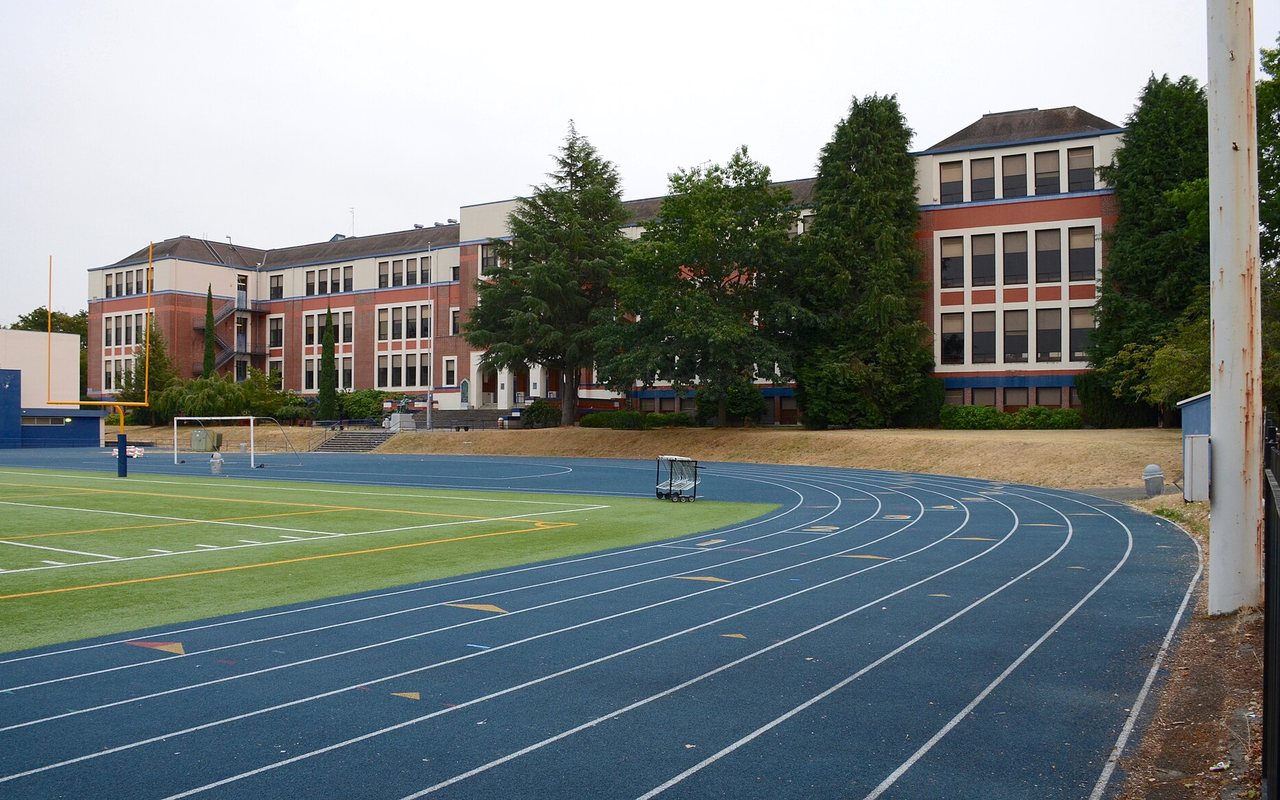
In May 2025, Portland voters were asked to pass a $1.83 billion bond, on track to be the largest school bond in state history, on the pitch that the money would rebuild and modernize three high schools (Cleveland, Ida B. Wells, and Jefferson) and repair aging elementary and middle schools, at a continued tax rate of around $2.50 per $1,000 of assessed value. The pitch to voters was continuity: the same rate, the same district, finishing a decade-old promise to modernize every PPS high school.
PPS handed program management to a Texas firm and cut its own staff. In December 2025, the Portland School Board voted 5–2 to approve a $61.5 million contract with Procedeo for five years of overseeing program management services covering the three high school modernizations and the Grice Adair Center. A draft external audit obtained by Willamette Week this month found the bond program is at heightened risk for fraud because Portland Public Schools outsourced its management to a Texas-based construction firm without sufficient oversight, and that PPS had failed to establish a sound business case to offload bond management services to Procedeo, and had become overreliant on the external consultant.
Auditors flagged the RFP itself as potentially rigged. The auditor found risks around favoritism and bias as PPS selected the firm, cataloging several instances in which PPS, ahead of contract solicitation and awarding, communicated with Procedeo about its intentions and plans around the proposed services and how the firm could help PPS. Auditors also noted that PPS did not provide documentary evidence to support its assertion that it talked with other consultants on similar topics, and the request for proposals process was also potentially subject to bias, pointing to scoring practices by certain evaluators as one example.
PPS also paid Procedeo more than the invoices supported. Auditors said PPS had overpaid Procedeo by more than $762,000 after failing to thoroughly review invoices. The audit further identified about $193,400 in unallowable bond project costs and nearly $1 million in unsupported payroll changes.
This Monday, the state referred it for criminal investigation. Oregon Secretary of State Tobias Read on Monday referred an investigation his office began into Portland Public Schools to the Oregon Department of Justice and the Oregon Government Ethics Commission. In a referral letter to OGEC that WW obtained through a public records request, Read's deputy, Michael Kaplan, cited potential civil violations of two state laws and noted he'd referred the matter to ODOJ, which handles criminal investigations. The referral cites possible civil violations of state laws that public officials may not use or attempt to use their official position to obtain financial gain for themselves or any business.
This is the largest school bond in Oregon history, and voters approved it at $2.50 per $1,000 of assessed value on the strength of PPS's ability to deliver three high schools. If the outside firm hired to deliver them was picked through a process an auditor now describes as potentially biased, then every dollar routed through Procedeo's management sits under a cloud until the DOJ and the ethics commission finish their work. The three schools are still going to get built. What's in doubt is whether the district has the internal capacity to know if the money is being spent right.
Recall petition signature window runs through mid-December. Former Portland Public Schools board member Michael Rosen is leading a recall effort of Chair Eddie Wang. Rosen will need to collect 38,000 valid signatures over the next three months to allow for a recall vote.
Final audit expected to be released publicly. The Sjoberg Evashenk report obtained by WW is a draft; the final version, and PPS's formal response, are the next dated document to watch.
📁 RECEIPTS: KGW · PPS declares victory on $1.83B bond (May 2025) · WW · School Board refers $1.83B bond to voters (Jan 2025) · WW · External auditor finds PPS bond program at heightened risk of fraud (Sept 15, 2026) · WW · Secretary of State refers PPS to DOJ (Sept 22, 2026) · KATU · Recall effort filed against board chair Eddie Wang
🔍 EVERYTHING ELSE ON THE BEAT
Update: The private jet hangar plan at Hillsboro Airport is officially dead: Sky Harbour withdrew its application ahead of the October council showdown, mooting both community appeals of a project that would have leased 13.7 acres of Port of Portland land for seven hangars. · via Hillsboro Herald
Developing: TriMet's fuel costs have surged as much as 84% over weekly budgeted amounts in 2026, on top of the $1.75B FY27 budget that already assumed service cuts. New pressure on a system already trimmed to the bone. · via TriMet
Open: The pro-participatory-budgeting PAC has now raised around $554,000 as Measure 26-267, which would let residents decide roughly 2% of the city budget (~$16M/year), draws organized opposition from Mayor Wilson six weeks out from the November vote. · via Willamette Week
Update: The PPS bond story has legs: a former board member has filed a recall petition against Board Chair Eddie Wang, needing about 38,000 signatures in 90 days to force a vote. · via Daily Tidings
HOW DOES A PUBLIC AGENCY ACTUALLY PICK WHO GETS A BIG CONTRACT?
That last point is exactly where PPS's Procedeo audit landed: pre-solicitation contact with the eventual winner, and no documentary evidence of equivalent conversations with other consultants.
First, the agency chooses which kind of solicitation to run. Under Oregon's public contracting code, an agency can run either an ITB (Invitation to Bid) or an RFP (Request for Proposals). An ITB typically defines the scope of work with detailed plans and specifications and is awarded to the lowest and best bid. An RFP more broadly defines the scope of work, often by identifying a program or requesting a solution, and is awarded based on the level of technical ability shown as well as cost. The RFP is where discretion lives: 'technical ability' is judgment, not arithmetic.
Firms submit proposals; evaluators score them. The agency assembles a panel of evaluators who score each proposal against criteria the RFP laid out (relevant experience, staffing plan, price, etc.). The scores rank the firms into a 'competitive range', a shortlist the agency is allowed to negotiate with. That scoring step is where bias can enter, since evaluators' point spreads shape who ends up in the range.
Losers get a shot to protest before the contract is signed. The agency provides written notice to all proposers in the competitive range of the agency's intent to award the contract. An unsuccessful proposer may protest the intent to award. After the protest period expires, or after the agency has provided a final response to any protest, whichever is later, the agency commences final contract negotiations. This is the built-in window where a losing bidder can force the agency to show its work.
The paper trail is what makes the whole thing reviewable. Every step (the criteria in the RFP, the evaluators' scoresheets, any pre-solicitation conversations with vendors, and the agency's response to protests) is supposed to be documented. When an auditor later asks 'why this firm', the answer lives in that file. If the file is thin, or if the agency talked to the eventual winner before the RFP went out and can't show equivalent conversations with anyone else, that is the tell.
🔍 SPOT IT: Next time a big public contract award draws complaints, ask two questions: was it an RFP or an ITB, and did any losing bidder file a protest? If it was an RFP with no protest, either everyone was happy or nobody thought it was worth fighting. Both answers tell you something.
📁 RECEIPTS: Oregon Administrative Rules · OAR 137-049-0650 (RFP process) · League of Oregon Cities · Public Contracting handbook (Ch. 13)
🗳️ YOU PICK NEXT WEEK'S CASE
Three cases are on my desk. Whichever gets the most votes by Sunday, I open Monday.
👋 THAT'S THE FILE
Before you go — two things:
📂 Got a promise you want investigated? Send me the tip.
🕵️ Know someone heading to the ballot box? Deputize them.
See you next Friday,