
Blazers media day at Moda Center on Monday, Ja Morant doing the fresh-start interview circuit and Dame Lillard back on the court after a year away from it with a torn Achilles. Training camp opened Tuesday, and half the city is already projecting a 50-win season from six minutes of camp footage. Anyway. Onto money that moved, where the fresh start is coming from the Oregon Department of Justice.
In today’s case file:
Let's follow the money. 🕵️
P.S. Forwarded this? Get your own case file every Friday. It's free.
👟 THE $7M SHOE STARTUP IS NOW A DOJ FILE
A Loan the City Wrote Against Its Own Rules
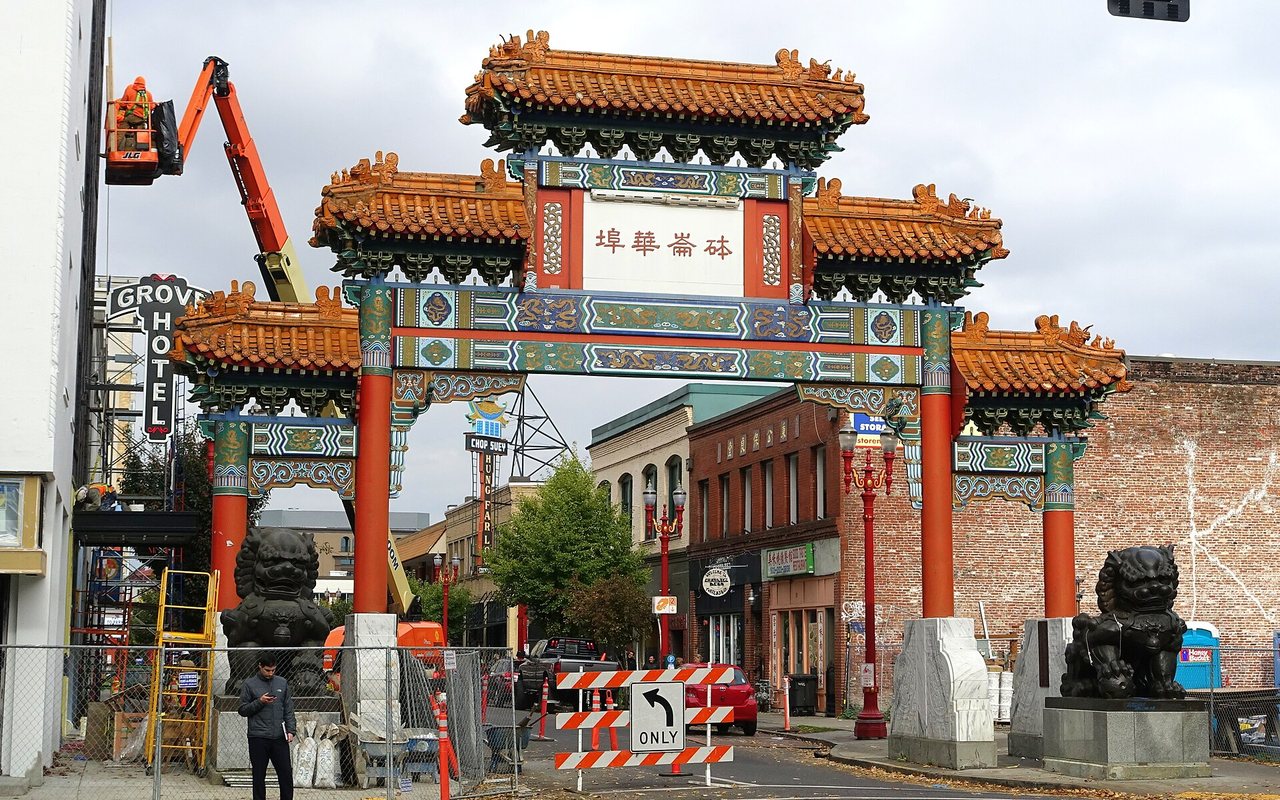
In early 2025, Prosper Portland pitched a nine-building shoe manufacturing campus that would revive one of Portland's most beleaguered neighborhoods. The city's economic development agency unanimously approved a loan to a startup called Made in Old Town, which had already pulled a state grant on the strength of the same pitch. The sell was simple: public dollars seed a footwear hub, Old Town gets jobs and tenants, taxpayers get repaid.
Prosper lent $7M on terms that broke its own loan guidelines. Prosper approved a $7 million loan to purchase two buildings, with terms that flouted its own guidelines for commercial loans, written just 11 months before, as WW first reported in February 2025. The state had already added a $2 million grant from the Oregon Legislature in 2024, bringing public exposure to roughly $9M.
The private match that justified the deal never materialized. Made in Old Town failed to meet the city's requirement that it secure an additional $5.7 million to close the financing gap needed to build out manufacturing and office spaces in the two buildings it purchased this summer using the Prosper loan. According to a copy of the loan agreement, MiOT, because it failed to raise the remaining funds, is in material default.
The project collapsed in March. The city became the landlord. "It is disappointing this effort will not move forward," Cornell Wesley, executive director of Prosper, said in a statement to WW. "Prosper Portland believes the borrower no longer appears to have a viable business strategy." Prosper is now seeking tenants for the two buildings, which between them contain 88,500 square feet of commercial and office space.
Now the state DOJ wants the records. The Oregon Department of Justice has subpoenaed records as part of an investigation into the failed startup Made in Old Town, which secured a $2 million grant from the state legislature in 2024 and then a $7 million loan from Prosper Portland in 2025 before going belly up earlier this year. The subpoena, dated July 13, requests records specifically from the Old Town Community Association, the neighborhood association that served as fiscal sponsor of the project. A Prosper Portland spokesperson said the agency was unaware of the subpoena.
Prosper Portland runs on roughly $200M a year in public money, most of it from tax-increment financing districts. The agency's defense of the Made in Old Town loan (that risky bets are the point) only works if the risk guidelines mean something, and here they did not. The DOJ's Charitable Activities Section is now asking the fiscal sponsor for its books, which is how probes of this kind usually begin. Whatever the investigation finds, the taxpayer position is already set: the startup is gone, the match money never arrived, and the city owns two Old Town buildings it has to lease out at whatever the market will bear.
DOJ records deadline has passed. The subpoena set a deadline of August 8, 2026 for the Old Town Community Association to produce records. The investigation's next public move is what to watch.
Prosper is marketing the two buildings to tenants. Prosper spokesman Shawn Uhlman says the agency has not set a specific rent, but is instead asking prospective tenants to make their best offer based on their capacity to pay market rents, and that Prosper is seeking seven to 10 tenants to fill the two buildings.
📁 RECEIPTS: WW · Prosper approved $7M loan outside its guidelines (March 2026) · WW · MiOT fails to meet loan terms, material default (Dec 2025) · WW · Oregon DOJ subpoenas records (Sept 28, 2026) · WW · Prosper seeks tenants after repossession (June 2026) · Chronline · AG subpoenas Old Town records (Sept 27, 2026)
🔍 EVERYTHING ELSE ON THE BEAT
Developing: A California carpenters union wrote a record $10M check to an Oregon PAC on Sept. 16, with no public plan for where the money lands in the Kotek-Drazan race. · via Oregon Journalism Project
Update: A new state audit found the Oregon Department of Education has failed to oversee the $338M High School Success program, implementing one of eight 2024 recommendations. · via Willamette Week
Developing: TriMet is cutting more than 400 positions as it tries to close a roughly $300M budget hole after voters rejected Measure 120 in May. · via OPB
Open: Eugene voters will weigh a clean energy fund modeled on PCEF, the Portland tax-the-business-giants template now spreading to other Oregon cities. · via Portland Mercury
WHAT IS A 'FISCAL SPONSOR,' AND WHY IS ONE IN A DOJ SUBPOENA?
This week's hero is why that distinction matters: the DOJ did not subpoena the shoe startup, it subpoenaed the neighborhood nonprofit that served as the project's official nonprofit home.
A fiscal sponsor is a nonprofit that lets another project use its tax-exempt status. A nonprofit (the fiscal sponsor) agrees to provide administrative support, legal oversight, and financial management to a project or group that does not have its own tax-exempt status. This enables the sponsored project to receive grants and tax-deductible donations under the sponsor's 501(c)(3) designation, while the sponsor assumes responsibility for ensuring compliance with IRS regulations and proper fund management. In plain words: the sponsor is the official bank account and the official grown-up on the paperwork.
The sponsor is legally in charge of the money, not a mail drop. Using a fiscal sponsor satisfies IRS requirements as long as the fiscal sponsor maintains the right to decide, at its own discretion, how it will use contributions. Maintaining control over the donated funds is a requirement of a legitimate fiscal sponsor arrangement. That is why the sponsor's records are the ones subpoenaed when something goes wrong: the money legally belongs to them while they hold it.
Sponsors typically take a cut off the top. Fiscal sponsors typically charge an administrative fee to offset the cost of providing this infrastructure. According to Propel Nonprofits, that fee generally falls between 5% and 15% of all funds managed on behalf of the sponsored project. The fee is the price of borrowing someone else's nonprofit status.
That is why Oregon's DOJ went to the sponsor, not the startup. The Old Town Community Association, a neighborhood group, was the fiscal sponsor for the Made in Old Town project. If the public money flowed through the sponsor, that is where the records are. The Oregon DOJ's Charitable Activities Section is the office that regulates nonprofits in the state, which is why the subpoena landed there.
🔍 SPOT IT: Next time you see a splashy local project described as 'a project of' or 'in partnership with' an established nonprofit, that is often a fiscal sponsorship. It is not a scandal by itself. It is just the receipts trail: the sponsor is where the paperwork and the money live.
📁 RECEIPTS: National Council of Nonprofits · Fiscal Sponsorship for Nonprofits · Oregon DOJ · Charitable Activities Section
🗳️ YOU PICK NEXT WEEK'S CASE
Three promises are on my desk. Whichever gets the most votes by Sunday, I open Monday.
👋 THAT'S THE FILE
Before you go — two things:
📂 Got a promise you want investigated? Send me the tip.
🕵️ Know someone heading to the ballot box? Deputize them.
See you next Friday,