Dame Lillard walked back onto the Moda Center floor Wednesday night and the preseason crowd lost its mind over a game that didn't count. Portland won 123 to 118 and nobody cared about the score. Onto money that did count: a $1.2 billion promise to fix our school buildings, and the list of buildings now up for closure.
In today’s case file:
Let's follow the money. 🕵️
P.S. Forwarded this? Get your own case file every Friday. It's free.
🏫 VOTERS PAID $1.2B. NOW 14 SCHOOLS MAY CLOSE.
The Buildings You Paid to Fix Are on the Closure List
In November 2020, Portland voters approved a $1.2 billion general obligation bond to modernize and upgrade PPS buildings, continuing a 30-year plan to rebuild every school in the district. Five months ago, in May 2025, they renewed it with another $1.83 billion for the same purpose, pitched as more renovations, roofs, seismic retrofits, and health-and-safety work across the district's elementary and middle schools. The sales pitch, in both cases, was that these were the buildings worth investing in for the next generation of students.
On Monday, PPS named up to 14 schools for closure. The district released two "rightsizing" scenarios: Scenario A closes 14 schools (13 elementary and Sellwood Middle School), Scenario B closes 11. The board is expected to vote in December, with closures taking effect in fall 2027.
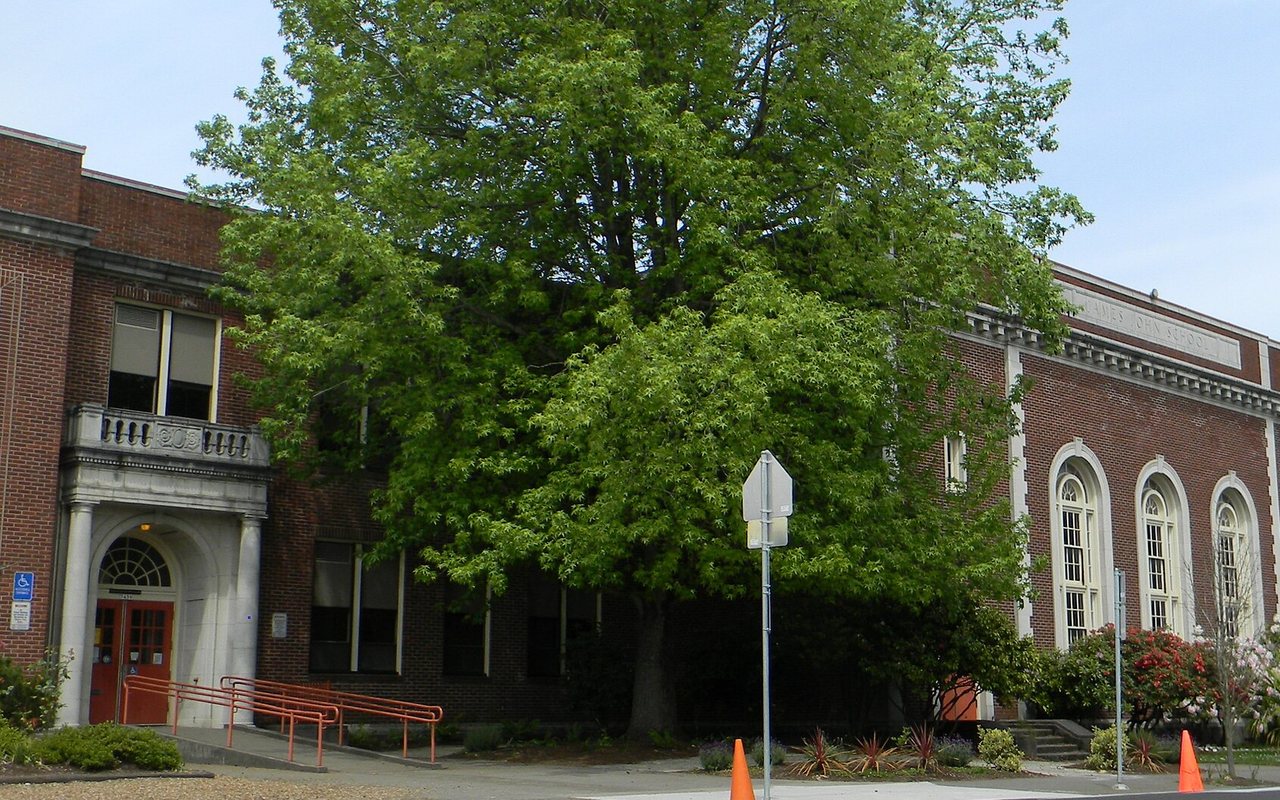
Several schools on the closure list received bond-funded capital work. Since 2012, PPS has completed over 1,100 health, safety and modernization projects that have touched every school in the district, including roofs, HVAC, seismic retrofits, and ADA upgrades. Buildings like Marysville and James John appear on the district's bond project rolls and now appear on the closure list.
The driver is operating money, not building money. PPS faces a $56.3 million deficit in the 2026-27 budget and projects a $65.2 million gap in 2027-28, even after cutting about $170 million from its budget since 2022-23. Enrollment has fallen roughly 12% since the pandemic, in a district that once served over 80,000 students and now serves roughly 41,000.
The bond money can't legally plug the hole. Under Oregon's constitution (Article XI, Section 11L) and ORS 328.205, bond proceeds can only pay for capital costs: construction, equipment, repair. They cannot pay teachers, keep a school open, or close an operating deficit. The $1.2B and the $1.83B are, by law, for buildings only.
Portland just voted twice, in 2020 and in 2025, to put more than $3 billion of borrowing on its property-tax bill for school buildings. If the board closes 11 to 14 of those buildings next year, some of them freshly upgraded, taxpayers will still be paying off the debt on improvements to schools that no longer enroll students. That is not necessarily waste. Bond debt is a 25-to-30-year promise; an enrollment slide is a different problem on a different timeline. But voters were not asked whether they wanted to fund modernizations at schools the district would soon close, and that is the question now sitting on the board's desk.
Superintendent recommendation after November feedback. Superintendent Kimberlee Armstrong makes her recommendation to the board after a November public-comment period.
Board vote expected in December. Approved closures would take effect in fall 2027.
📁 RECEIPTS: PPS · 2026-27 Budget Process (official) · PPS Bond Program · official project page · TSCC · PPS 2025 Bond Measure Review (Measure 26-259) · OPB · Up to 14 schools closing in PPS rightsizing scenarios (Oct 5, 2026) · Willamette Week · PPS releases two closure scenarios (Oct 5, 2026) · Willamette Week · $56M deficit, 336 layoffs proposed (Apr 2026) · ORS Chapter 287A · bond proceeds restricted to capital costs
🔍 EVERYTHING ELSE ON THE BEAT
Developing: The City Auditor cut one performance auditor position for FY 2026-27, meaning one fewer audit will land this year, a trim the office made to help respond to the city's fiscal crisis. · via Portland City Auditor
Update: Council spent Tuesday morning quietly updating program fees for payday lenders, pay-and-park lots, and social games, three consent-agenda ordinances with the kind of small revenue footprint that rarely makes the news. · via City of Portland
Over budget: Metro's auditor warned the Oregon Zoo was unprepared to implement its $380M voter-approved bond, flagging gaps in project controls and a first project that delivered about half of what was promised. · via Hoodline
Open: Metro's own 10-year financial check found operating expenditures up 199% while revenue grew 111%, a widening gap the auditor's office flagged in its June 2026 report. · via Metro Auditor
HOW DOES A SCHOOL DISTRICT ACTUALLY DECIDE WHICH SCHOOLS TO CLOSE?
This week's hero is exactly this process playing out in Portland: scenarios released Monday, public comment through November, board vote in December.
The trigger is almost always money plus empty seats. Districts don't close schools because a building is bad. They close schools because the dollars-per-student math stops working: operating costs (teachers, custodians, utilities) are mostly fixed per building, so when enrollment drops, the cost of keeping a half-empty building open comes out of other schools' budgets.
Staff draw up "scenarios," not a single plan. The district's planning office compares every building on a short list of factors (enrollment vs. capacity, building condition and ADA access, how far students would have to walk, how racially and economically balanced the receiving schools would be) and produces two or three scenarios. These are negotiating positions, not final answers.
The board votes, but the public comment window is where the list changes. Between the release of scenarios and the board vote, parents, teachers' unions, and neighborhood groups organize to defend specific buildings. Schools get added back on, or swapped in, based on who shows up. Metropolitan Learning Center's high school was on last year's list and was saved by advocacy; it is on this year's list again.
A bond-funded building has no special protection. Bond money paid for capital work (roofs, seismic, HVAC) with a 20-to-30-year useful life. Closing the school doesn't retire the debt; property owners keep paying the bond off on the same schedule, and the upgraded building usually gets repurposed, mothballed, or sold.
🔍 SPOT IT: When your district announces "scenarios" instead of a plan, that's the negotiating window. The schools that survive it are usually the ones whose parents filled the room, not the ones with the strongest building.
📁 RECEIPTS: PPS · Rightsizing / 2026-27 budget process (official) · ORS Chapter 287A · bond proceeds restricted to capital costs
🗳️ YOU PICK NEXT WEEK'S CASE
Three promises are on my desk. Whichever gets the most votes by Sunday, I open Monday.
👋 THAT'S THE FILE
Before you go — two things:
📂 Got a promise you want investigated? Send me the tip.
🕵️ Know someone heading to the ballot box? Deputize them.
See you next Friday,