
Portland spent this week in short sleeves in mid-October, chasing a 76-degree Friday that is running nearly 15 degrees above normal and flirting with a 1922 record. We refreshed the forecast like we don't know what rain is. Anyway. Onto money that moved, or at least money that might, pending a vote.
In today’s case file:
Let's follow the money. 🕵️
P.S. Forwarded this? Get your own case file every Friday. It's free.
🏛️ THE $16M VOTE WITH THE RULES STILL TBD
A Permanent Promise Written in Pencil
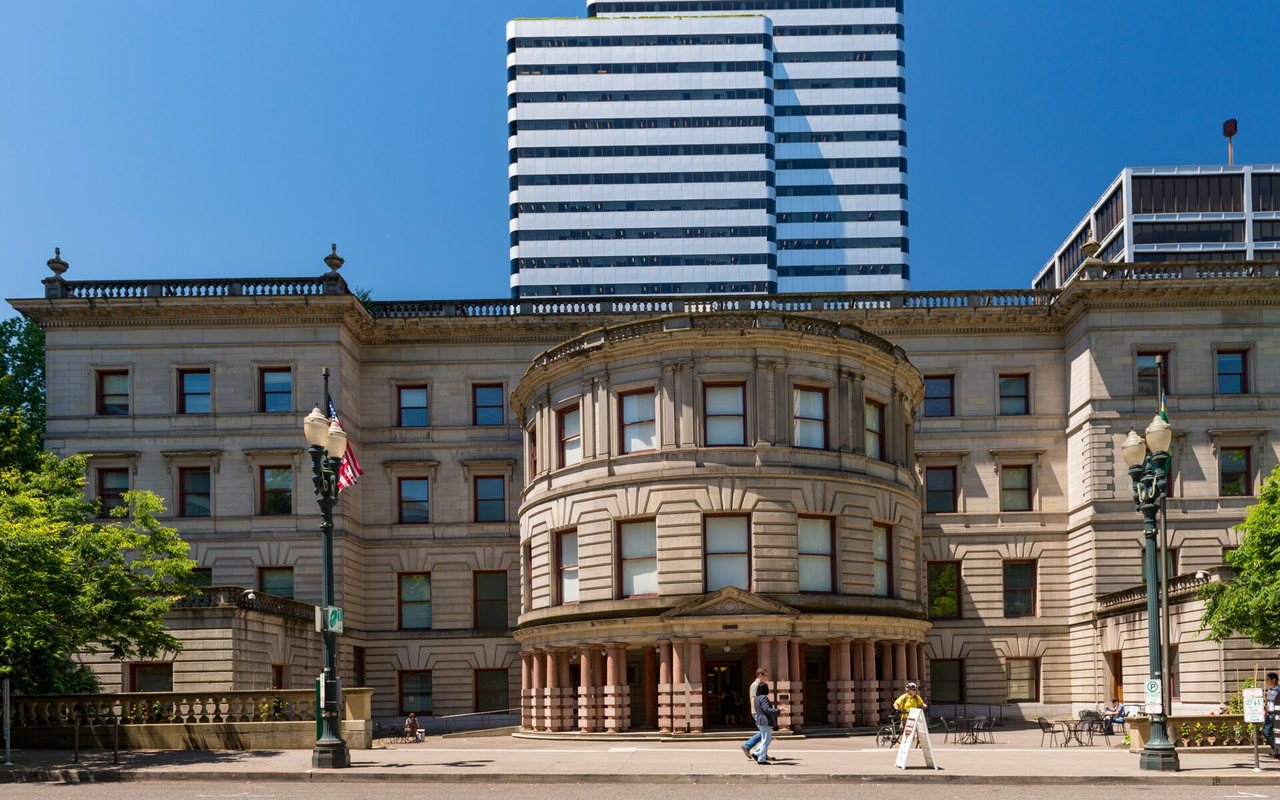
Measure 26-267, the only city question on Portland ballots this fall, asks voters to amend the city charter so residents get binding say over an amount equivalent to 2% of the city's General Fund discretionary ongoing expenses, which the ballot summary estimates at roughly $16M a year. Backers call it Community Budgeting for All; the campaign goes by Your 2 Cents Portland. If voters approve, the program must be operational by July 2027.
The ballot title promises a mechanism, not an outcome. The measure requires Council to allocate at least 2% of the General Fund discretionary ongoing budget to a participatory budgeting program, with projects assessed and refined by city staff and resident budget delegates and then put to a binding resident vote. The ballot summary notes Council may identify the money from anywhere in the city budget to meet the obligation.
Key implementation details won't be decided until after the vote. Willamette Week reports the measure's language leaves open who gets to vote on projects, what the age cutoff would be, and what voting process would be used. Backers say the ambiguity is intentional; critics say it is a check Council has to cash sight unseen.
There is no dedicated source of funding. The opposition campaign, Protect Our City Services, says writing the obligation into the charter without naming new revenue means the $16M a year is pulled from the General Fund that pays for firefighters, 911 dispatch, parks, and homeless shelters.
The petition cleared a 15% charter-amendment bar. Petitioners submitted 78,743 signatures in July; Multnomah County certified at least 41,860 as valid Portland voters, enough to qualify. The city referred it to the county on August 28, 2026, and it was numbered Measure 26-267.
This is the only city question on Portland ballots this fall, and whichever way it goes, it is a vote about who holds the pen on the budget. A yes writes a recurring $16M floor into the charter before Portland has run a citywide pilot of participatory budgeting. A no keeps budget authority where it is today, in a Council and mayor's office that just closed a record gap with layoffs and homeless-services cuts. Either outcome is binding on next year's budget conversation.
Ballots mailed this week; Election Day is November 3, 2026. Multnomah County began mailing ballots. Measure 26-267 is the only Portland city question on them.
If approved, the program must be operational by July 2027. That gives Council roughly eight months to resolve the questions the measure leaves open, including the voting rules and how to carve $16M out of an already-stretched General Fund.
📁 RECEIPTS: Multnomah County · Measure 26-267 ballot title · City of Portland Auditor · 26-267 petition log · Willamette Week · Key questions won't be answered until after the election · Protect Our City Services · opposition campaign · KATU · $16M program, officials fear public safety cuts
🔍 EVERYTHING ELSE ON THE BEAT
Developing: PPS released the final external bond audit on Oct. 7 and signaled it won't follow key recommendations, including renegotiating the $61.5M Procedeo contract, while an Oregon DOJ criminal review of that contract remains pending. · via Willamette Week
Developing: A TriMet spokesperson told KATU "deep, impactful service cuts are coming in November 2026" as the agency works to close a $300M budget gap, with the board set to lock in the exact form by June. · via KATU
Open: The city's new $12-a-month Transportation Utility Fee hits utility bills on January 1, 2027, and Council directed staff to produce a low-income relief plan for renters in multifamily buildings by year-end. No draft has been released publicly yet. · via Portland Mercury
Over budget: The $380M Oregon Zoo bond's first project, the entry plaza, was scaled back after a draft design came in near $28M on a $19M budget, and Metro's auditor warned the zoo wasn't ready to run the program. Oversight committee meetings continue this fall. · via KPTV
HOW DOES A REGULAR PORTLANDER PUT A QUESTION ON YOUR BALLOT?
That 15% charter-amendment bar is the one Measure 26-267 cleared this summer, which is why its $16M-a-year obligation would land in the charter rather than the city code.
It starts with a 'prospective petition' and a target election. A chief petitioner (a registered Portland voter) files the full text of the proposed law with the City Elections Office, along with the election at which they want it voted on. That election has to be a primary or general election within 2 years and 4 months of filing.
The signature bar is set in state law, and charter amendments cost more. Oregon's local initiative manual sets the thresholds for a city measure: valid signatures from 15% of city voters for a charter amendment, 6% for most other initiatives, and 10% for a referendum (undoing a law Council just passed). The city elections officer verifies them.
If it qualifies, it gets a measure number and goes to voters. The city auditor refers the qualified petition to Multnomah County Elections, which assigns a measure number (the '26-' prefix is the county code). From there it works like any ballot measure: a majority yes vote adopts it, and the charter changes.
The charter is the hardest layer to change back. Ordinances can be rewritten by Council. A charter amendment can only be undone by another vote of the people. That's why the signature bar is higher, and it's also why a charter-level dollar floor is a different animal from a budget line Council can trim next year.
🔍 SPOT IT: Next time a measure's ballot title starts with 'Amends Charter,' you're looking at a rule only another citywide vote can reverse. That's the one to read twice before signing or voting.
📁 RECEIPTS: Oregon Secretary of State · County, City, and District Initiative and Referendum Manual · City of Portland · Initiative petition one-pager
🗳️ YOU PICK NEXT WEEK'S CASE
Three promises are on my desk. Whichever gets the most votes by Sunday, I open Monday.
👋 THAT'S THE FILE
Before you go — two things:
📂 Got a promise you want investigated? Send me the tip.
🕵️ Know someone heading to the ballot box? Deputize them.
See you next Friday,