
The Blazers are 7-3, Lillard is back, and Tuesday hit 65 degrees in November like someone was gaslighting the calendar. Portland spent the week pretending this is fine, which is a thing Portland is very good at. Anyway. Onto a budget hole with a very specific shape.
In today’s case file:
Let's follow the money. 🕵️
P.S. Forwarded this? Get your own case file every Friday. It's free.
📚 THE $1B RESERVE, THE $65M HOLE
The Reserve You Can See But Can't Touch
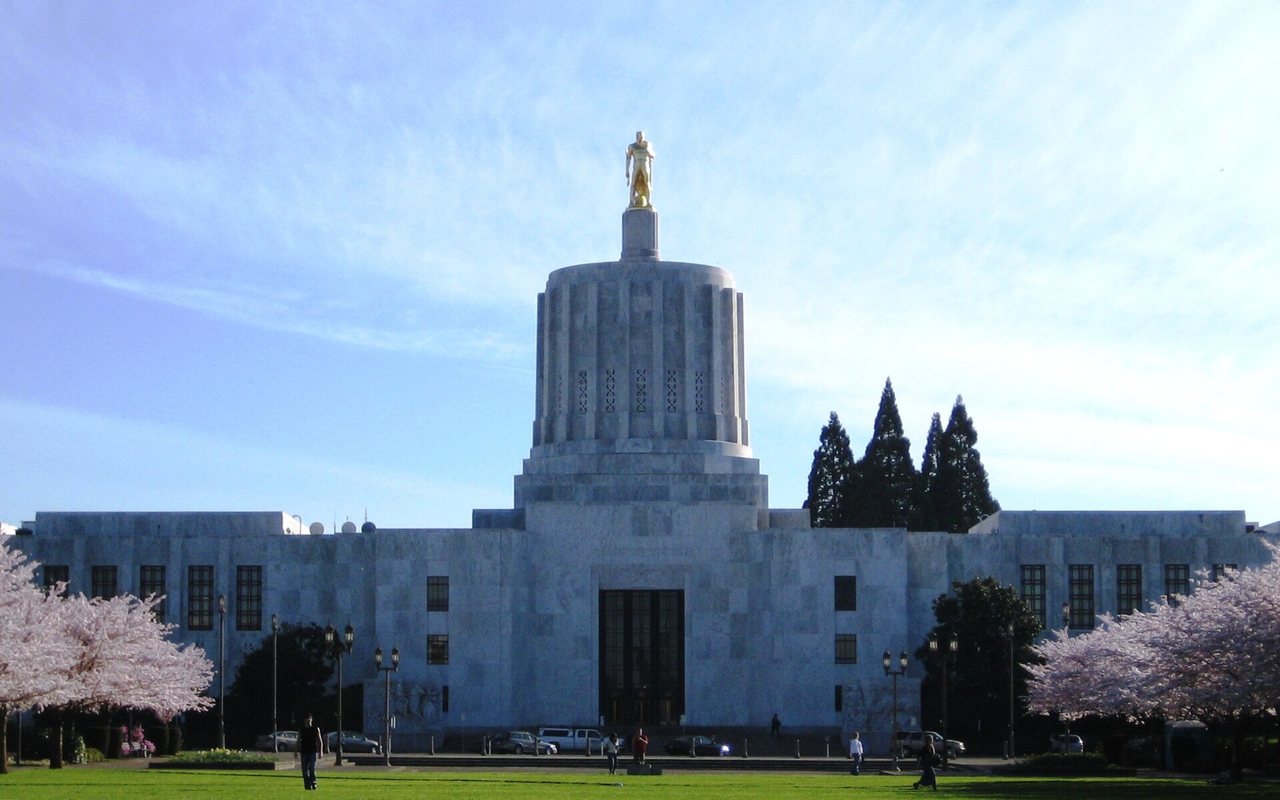
In 2002 Oregon voters approved a constitutional amendment converting the Education Endowment Fund into the Education Stability Fund, allowing the principal to be used to fund public education, capped at 5% of General Fund revenue, with use requiring a 3/5 legislative majority. The pitch to voters was simple: lottery money would feed an account that kept schools afloat when the state's budget hit a wall. Two decades later the account sits at about $1 billion, meant to help stabilize education spending in a budget emergency.
PPS is staring at a $65M deficit and hundreds of jobs. District officials project a $65 million deficit for next school year, and say about two-thirds of that is driven by increased retirement and labor costs through the Public Employees Retirement System, or PERS. PPS anticipates cutting up to 450 full-time positions or the equivalent next year, including administration and school staff. Monday's announcement provides a fuller picture of district plans, under public deliberation for weeks, to close up to 14 schools as part of a "rightsizing" effort.
The district is asking the state to open the reserve. "The Governor should consider accessing $500 million from the Ed Stability Fund to buy down the PERS rate for schools across the state," Morrison said. PPS chief financial officer Michelle Morrison said that if the state provided such relief, the district's budget gap would shrink to $42.7 million.
Kotek says no, and points at the Legislature. Kotek said she does not support using the state's one-time reserve funds to address the district's budget problems. When OPB asked Kotek in October about past calls to use stability funds to help schools, Kotek said it wasn't up to her. "That is up to the legislature. There was no interest from legislative leaders to do that. I would bring it up, and it was summarily dismissed," Kotek said.
PPS says the last reserve it used was its own. PPS Chief Financial Officer Michelle Morrison put it this way: "PPS has saved the state $500 million since 2002, when those pension obligation bonds were originally sold." Pension bonds have been a critical source of financial savings for PPS and many other districts over the years. Portland issued over $491 million in pension bonds, and as of the 2017 valuation, has saved over $225 million versus doing nothing. That strategy is now exhausted.
This is the clearest test yet of what the Education Stability Fund was actually for. Voters approved a constitutional amendment so that an education reserve would exist for exactly this kind of year, when the money going out faster than the money coming in puts classrooms on the chopping block. The state says the conditions for using it haven't been met. The district says kids are about to pay for a definition. Someone in Salem is right, and either way, Portland families get the bill. According to the Oregon School Boards Association, the ESF has been tapped nine times since it was created in 2002. Most recently, $400 million was withdrawn in the 2019-2021 biennium.
Superintendent's closure recommendation, November 17. Wang said all the feedback the board is receiving will continue to help as it prepares to hear the Superintendent's final recommendation on November 17, then a final vote by the board is expected in December.
Board vote, December. The seven-member board votes on which scenario (up to 14 closures, partial consolidation, or defer) to adopt.
📁 RECEIPTS: ORS 348.696 · Education Stability Fund statute · LRO · Education Stability Fund background · OPB · PPS asks state to step in (Nov 2) · KATU · Kotek rejects tapping reserves · WW · PPS begs state for bailout (Nov 4)
🔍 EVERYTHING ELSE ON THE BEAT
Closed: Win: Portlanders rejected Measure 26-267 by a two-thirds margin, 124,800 to 62,500, killing the plan to carve 2% of the general fund off for a participatory-budgeting process. Depending on your politics, that's the voters saving the budget or losing their only lever on it. · via Willamette Week
Update: TriMet's "historic" service cuts are now live: the MAX Green Line no longer runs to downtown Portland, and 34 bus routes were altered or eliminated. The agency is still $158 million short of balanced. · via KGW
Open: Your property tax bill is due Monday. The county is collecting $2.602 billion across all districts this year, up 3.5% from $2.515 billion in 2025. That's the sum of every bond and levy you ever said yes to. · via Multnomah County
HOW CAN A $1B EDUCATION RESERVE SIT STILL WHILE SCHOOLS ARE CLOSING?
That is the exact gap PPS is trying to close this week: the district's crisis is real, but the fund's trigger isn't automatic, and the governor controls the emergency button.
The fund isn't a savings account. It's a constitutional lockbox. The Education Stability Fund was created by a constitutional amendment, separate and distinct from the state General Fund. That means the Legislature can't just vote to spend it the way they'd vote on any other line. The rules for opening it are written into the Oregon Constitution itself, which is why "just use the reserve" is harder than it sounds.
To unlock it, you need a specific kind of crisis AND three-fifths of the Legislature. To reach into the state's $1 billion Education Stability Fund, state law requires conditions such as negative economic forecasts and support from three-fifths of lawmakers in the Legislature. Kotek could also issue an emergency declaration, but she has yet to do so. So there are two doors: an economic trigger (revenue forecasts going the wrong way), or the governor declaring an emergency. Both require legislative buy-in to actually move money.
A single district's deficit doesn't meet the definition. The fund was designed for a statewide revenue collapse, the kind where the General Fund shrinks and schools everywhere get cut together. The reserve is funded by proceeds from the state's lottery and is meant for times of economic downturn in the state. Tapping the fund either requires that specific economic conditions be met (think, for example, revenue forecasts that indicate lower-than-projected general fund numbers) or a declaration of emergency by the governor. A PPS deficit driven by pension costs, in a year when state revenues are OK, doesn't clear either bar unless Kotek declares it does.
It has been opened before, just not often. According to the Oregon School Boards Association, the ESF has been tapped nine times since it was created in 2002. Most recently, $400 million was withdrawn in the 2019-2021 biennium. Each withdrawal was tied to a statewide revenue shock (the 2008 crash, COVID), not a single district's structural problem. That's the precedent the current fight is arguing over.
🔍 SPOT IT: Next time someone says "just use the reserve," ask which door they're opening: the revenue-forecast trigger or an emergency declaration. If the answer is neither, the fund stays shut regardless of how bad the problem looks.
📁 RECEIPTS: ORS 348.696 · Education Stability Fund (statute) · Legislative Revenue Office · ESF background
🗳️ YOU PICK NEXT WEEK'S CASE
Three promises are on my desk. Whichever gets the most votes by Sunday, I open Monday.
👋 THAT'S THE FILE
Before you go — two things:
📂 Got a promise you want investigated? Send me the tip.
🕵️ Know someone heading to the ballot box? Deputize them.
See you next Friday,