Portland has spent November watching the rain deficit grow in a month that's supposed to be one of our wettest, which is the kind of civic mood where you squint at the AQI map, then the sky, then your umbrella, and go find something else to worry about. Lucky for us: the city just put a December deadline on a bill it hasn't figured out how to pay. The case opens with a familiar silhouette and a clock.
In today’s case file:
Let's follow the money. 🕵️
P.S. Forwarded this? Get your own case file every Friday. It's free.
🏀 $573M ON THE TABLE, SIX WEEKS TO SIGN
The Deal With a Signature Missing
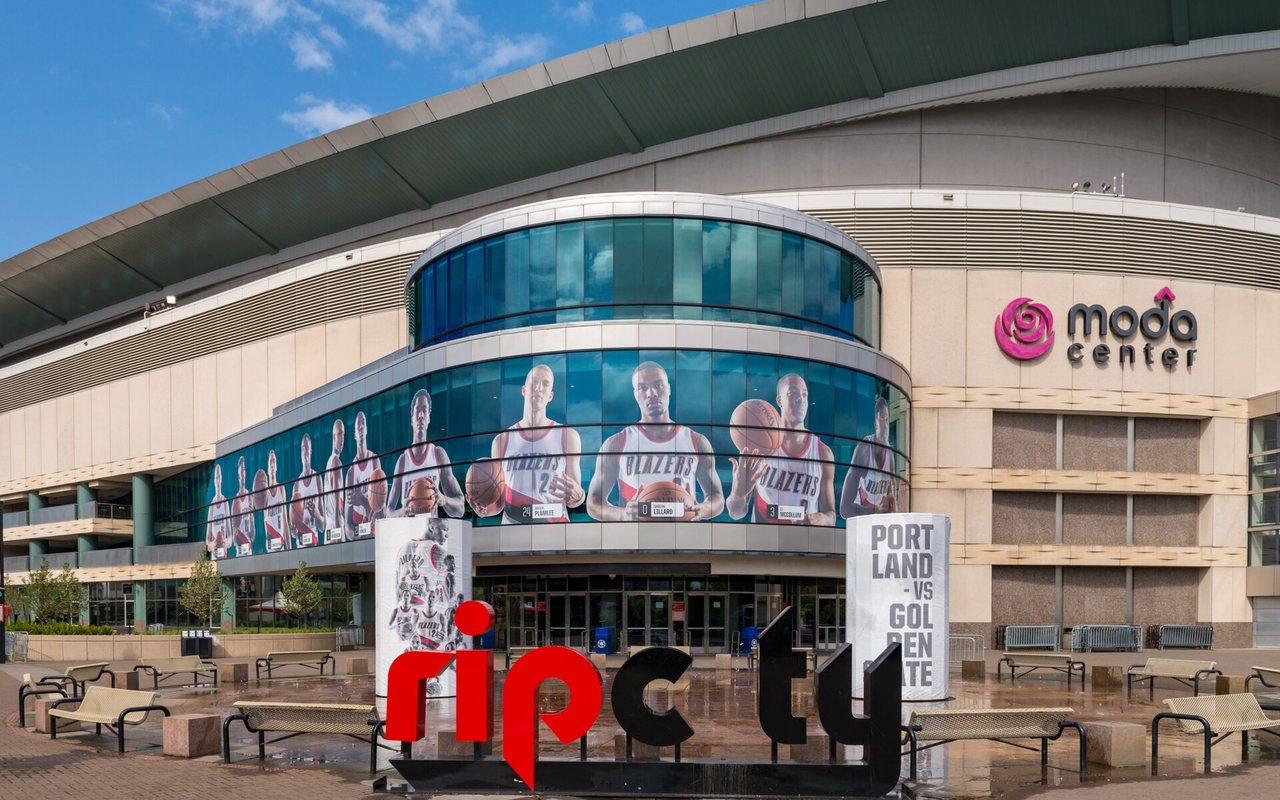
In March 2026, Governor Tina Kotek signed SB 1501, authorizing Oregon to issue debt instruments to yield $365,000,000 in net proceeds for Moda Center renovations. Multnomah County pledged roughly $101.6M. On August 12, 2026, the Portland City Council voted 8-4 to commit a further $120M, plus up to $275M for ongoing capital expenses over 20 years. Total public promise: a $573M renovation package, structured to keep the Portland Trail Blazers playing at the city-owned arena through at least 2050, contingent on a signed 20-year lease.
Every state dollar hinges on a lease the team hasn't signed. SB 1501 requires a binding commitment from the arena's management entity to lease the Moda Center for a minimum term of 20 years before Oregon can issue debt. No lease, no bonds.
The deadline is December 31, and the clock is now in weeks. The state's conditions must be completed by the end of December 2026, with a city council vote tentatively scheduled before its mid-December recess. If missed, the $365M bond authorization is unlikely to be reauthorized.
Portland committed $120M without naming where the money comes from. The term sheet does not bind the city to a specific funding source for the $120M contribution. Mayor Keith Wilson has floated taking $75M of it from the voter-approved Portland Clean Energy Fund, a move Councilor Steve Novick has publicly opposed.
The city and the team still disagree on the maintenance clause. The current bridge lease requires Rip City Management, the Blazers-affiliated operator, to maintain the arena to a 'first-class' standard. The lease does not define 'first-class.' The team wants it rewritten; the city has not publicly agreed to.
This is not an argument about basketball. It is an argument about where $573M of public money, a slice of future state income-tax receipts, and up to $275M in 20-year maintenance payments are actually coming from, and whether a voter-approved climate fund can be redirected to a billionaire-owned sports franchise. Portland's $120M has no identified funding source. Oregon's $365M depends on bonds whose debt service, by one estimate, could bring the state's total exposure to roughly $530M over the life of the deal. The decision landing in December is the biggest single public-money commitment the new council has made, and the newly-reelected incumbents inherit the invoice.
Portland City Council recess begins mid-December. Council President Jamie Dunphy has said he will not schedule a final funding vote until the full lease package is in hand.
State bond-sale conditions must be satisfied by December 31, 2026. Oregon's Department of Administrative Services says the state's conditions, including a signed 20-year lease, must be met by the end of December 2026.
📁 RECEIPTS: Oregon Legislature · SB 1501 B-Engrossed text · State of Oregon DAS · Moda Center Project page · City of Portland · What's next for the Moda Center · Willamette Week · Council approves term sheet 8-4 (Aug 12, 2026) · Blazers Edge · December deadline approaching without progress (Nov 13, 2026) · KATU · What's holding up Portland's Moda Center deal
🔍 EVERYTHING ELSE ON THE BEAT
Update: Property tax bills hit 300,000 Multnomah County mailboxes last month, totaling $2.602 billion for the 2026 tax year, up about 3.5% from 2025. The 3% discount deadline was Monday. · via Multnomah County
Developing: TriMet's August cuts are now the lived reality: 33 bus lines altered or eliminated and the MAX Green Line no longer serving downtown, with a $158M gap still unfilled. · via Willamette Week
Open: Portland City Council adopted its FY 2027-28 budget calendar on November 12, setting the clock for the next spending fight before incoming councilors are even sworn in. · via City of Portland
Update: After 19 rounds of ranked-choice counting, The Oregonian called all six District 3 and 4 seats for the incumbents. The council facing the Moda deadline is the council that'll still be there to pay for it. · via Axios Portland
HOW CAN A STADIUM PAY FOR ITSELF WITHOUT A NEW TAX?
That's the machine under this week's hero: Portland and Oregon aren't writing a $573M check from a savings account, they're promising a slice of future income-tax receipts to bondholders, and the lease is what makes the promise bankable.
The state doesn't raise a tax. It redirects one. SB 1501 creates the Oregon Arena Fund inside the State Treasury. Instead of sending certain income taxes to the general fund (where they'd pay for schools, prisons, and services), the state routes them straight into the arena fund.
The 'certain income taxes' are specific and already-existing. The law captures three streams of state income tax that are already being collected: withholding from employers physically located in the Rose Quarter, taxes on construction firms doing renovation work, and estimated taxes from performers who play the arena.
Then the state sells bonds against that stream. A 'revenue bond' is a loan from investors that gets paid back only from a specific pot of money, not the state's general taxing power. Oregon plans to sell up to $365M in bonds against the Oregon Arena Fund, meaning investors are betting on Rose Quarter payroll holding up for the next 20-plus years.
The catch: 'already-existing' money still has an opportunity cost. The Legislature's own analysis anticipated about $72M in the next budget cycle flowing into the arena fund instead of the general fund. That's money the state could have spent on anything else, redirected by statute to a single building.
🔍 SPOT IT: Next time a public project claims it 'doesn't cost taxpayers anything,' ask which existing tax stream is being redirected and which general-fund item is losing a seat at the table. A dedicated fund isn't free money. It's a reservation.
📁 RECEIPTS: Oregon Legislature · SB 1501 B-Engrossed statutory text · Oregon DAS · Moda Center Project explainer
🗳️ YOU PICK NEXT WEEK'S CASE
Three promises are on my desk. Whichever gets the most votes by Sunday, I open Monday.
👋 THAT'S THE FILE
Before you go — two things:
📂 Got a promise you want investigated? Send me the tip.
🕵️ Know someone heading to the ballot box? Deputize them.
See you next Friday,